The Current State of AI-Generated 3D CreationsAI 3D生成の現在地
In early 2024, generating a 3D model from a single image was just a fun experiment.
Now in mid-2026, it's become a practical consideration - deciding how to structure our pipeline.
Let's look back over the past two years by following the progression: from the clunky rotations of Stable Zero123 to the smooth local movement of Trellis and even Hunyuan 3D on ComfyUI.
2024年初頭、1枚の画像から3Dモデルを起こすのはちょっとした余興だった。
それが2026年半ばの今ではパイプラインをどう組むかという実務判断になっている。
Stable Zero123 のぎこちない回転から、ComfyUI 上でローカルに動く Trellis 2.0 や Hunyuan 3D まで、各段階を刻んだ動画をたどりながらこの2年を振り返ってみたい。
Season 1 - "Alternative Perspectives" rather than geometry (2024) 第1期 — ジオメトリではなく「別視点」(2024)
What was actually happening during this period was more akin to view-synthesis than 3D generation.
While Stable Zero123 and SV3D could convincingly render 2D images as if they were three-dimensional, the shapes they implied were more like mudballs - useful for exploring concepts, but not suitable for actual game environments.
What proved truly valuable wasn't the output itself, but rather the fact that even with just two-dimensional data, we were beginning to grasp clues about the 3D structure of models.
The real application value for this technology lay not in asset creation, but instead in its ability to generate reference materials.
この時期に起きていたのは、実のところ3D生成というよりビュー合成だった。
Stable Zero123 や SV3D は 2D 画像をそれらしく回してみせるが、そこで示唆される形状は泥団子のようなもので、コンセプトを探るには使えてもゲーム背景には持ち込めなかった。
当時ほんとうに効いたのは出力そのものより、2D データだけでモデルが3D構造の手がかりを掴んでいるという予兆のほうだ。
背景アーティストの実務に引きつけるならこの段階の使いどころはアセット生成ではなくリファレンス生成だった。


Phase 2 - Into the Local Open Graphs (2025) 第2期 — ローカル・オープン・グラフの中へ (2025)
2025 was the year 3D generation moved into ComfyUI and onto consumer GPUs.
Trellis 2.0 and Hunyuan 3D 2.1 produced meshes with defensible topology and real PBR intent; Direct3D-S2 and YVO3D pushed fidelity further.
NVIDIA's AI Blueprint made Blender a host for generation rather than just a cleanup room.
The significant shift for production: these tools stopped being websites and became nodes — schedulable, batchable, versionable.
2025年は、3D生成が ComfyUI とコンシューマ GPU に降りてきた年だった。
Trellis 2.0 と Hunyuan 3D 2.1 は破綻の少ないトポロジーと、PBR を見据えたマテリアルを返すようになり、Direct3D-S2 や YVO3D が忠実度をさらに押し上げた。
NVIDIA の AI Blueprint は Blender を後処理の部屋から生成のホストへと変えた。
制作の観点でいちばん大きかったのはこれらがWebサイトであることをやめてノードになったことだ。
スケジュールに乗せられ、バッチで回せて、バージョン管理下に置ける。


Phase 3 - Commoditization and Restructuring (2026) 第3期 — コモディティ化と再編 (2026)
By 2026, this field entered a period of reorganization.
Autodesk released its own native generator, and models capable of practical use began appearing—so fast that even specialized news channels (like 3DAINews) emerged to keep up with the release pace.
The bottleneck shifted downstream: to topology optimization, UV mapping, and the proper assignment of materials.
This is because tools like AutoRemesher became less critical, as the generation process itself had become relatively straightforward.
In August 2026, attention reached past generation itself.
Tencent's Hunyuan3D-Buffalo 1.0 (2608.02711, published August 3, 2026) unifies not just text-to-3D generation but also 3D understanding, instruction-guided editing, and part-level generation within a single architecture.
It reportedly recognizes individual parts of a finished asset, extracts them, replaces them by prompt, and edits only the selected region while leaving the rest of the geometry untouched.
Trained on an 87M-scale multimodal 3D corpus, it reports leading results on text-to-3D and 3D editing benchmarks.
Rather than regenerating the whole thing on every pass, you fix part of what came out.
In background terms this is the move from "regenerate the house" to "swap out just the window" — and its practical significance may exceed that of raw generation quality.
Then, in the latter half of August 2026, the axis of competition shifted to resolution and reduced post-processing.
Hi3D's V3.0 reached 2048³ voxel resolution, billed as a first for a commercially available AI 3D model (2.37 times the total voxel count of the previous 1536³), alongside 8K texture output and improved UV completion — with the stated aim of reducing the manual mesh repair required before production.
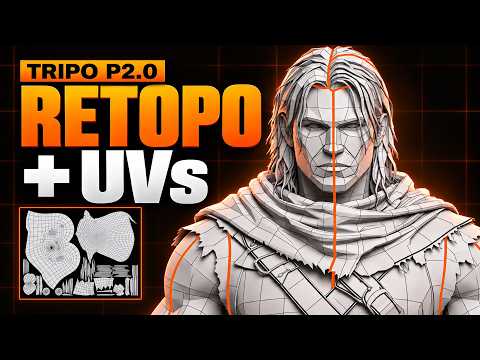
Around the same time, Tripo released P2.0, oriented toward low-poly generation.
High-poly fidelity and low-poly practicality have emerged as separate products.
That split matches production reality: an asset used only as a distant silhouette does not need 2048³, and a hero prop does not need automatic low-poly.
Now that generation itself is no longer the hard part, the differentiator becomes whether you can specify the granularity you want.
The DCC side is moving too, with coverage tracking how Blender is incorporating AI into its own development — generative AI is entering existing tools from the inside, not only supplying them from outside.
2026年に入るとこの分野は再編の局面に入った。
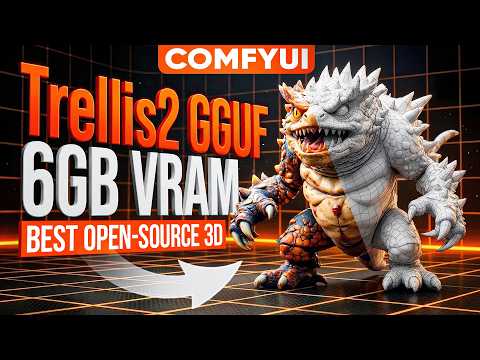
Autodesk が純正のジェネレーターを出し、実用になるモデルが VRAM 6GB で動き、リリースの速さに検証が追いつかないせいで専門のニュースチャンネル(3DAINews)まで成立している。
ボトルネックは下流へ移った。
リトポロジー、UV、マテリアルの意図付けだ。
AutoRemesher のようなツールが効いてくるのは、生成そのものがもう難所ではなくなったからだ。
現場の実運用パターンとしては、AIでベースメッシュやコンセプトを起こし、FBXで書き出してから手慣れた3Dソフトへ持ち込んで仕上げる、という「AIは加速装置であって置き換えではない」という型がひとつの標準になりつつある。
2026年8月には、その「生成のあと」に手が伸びた。
Tencent の Hunyuan3D-Buffalo 1.0(2608.02711、2026年8月3日公開)は、text-to-3D の生成だけでなく、3Dの理解、指示による編集、パーツ単位の生成をひとつのアーキテクチャに統合している。
完成したアセットのパーツを個別に認識し、抜き出し、プロンプトで置き換え、選んだ領域だけを編集して残りのジオメトリは触らない——という操作ができるとされる。
8700万規模のマルチモーダル3Dコーパスで学習されており、text-to-3D と 3D編集のベンチマークで先頭級の成績を報告している。
生成のたびに丸ごと作り直すのではなく、出てきたものを部分的に直す。
この方向は、背景制作でいえば「1軒の家を生成し直す」から「窓だけ差し替える」への移行にあたり、実務上の意味は生成品質の向上より大きいかもしれない。
そして2026年8月後半、競争軸は解像度と後処理の削減へ移った。
Hi3D が V3.0 で、商用提供されるAI 3Dモデルとしては初となる 2048³ ボクセル解像度に到達した(従来の 1536³ から総ボクセル数で2.37倍)。
8Kテクスチャ出力とUV補完アルゴリズムの改善を伴い、狙いとして明示されているのは実制作へ入る前の手作業のメッシュ修復を減らすことだ。
同じ時期に Tripo が P2.0 でローポリ生成に軸足を置いた版を出している。
ハイポリの忠実度とローポリの実用性が別々の製品として立ち上がってきたことになる。
この分岐は背景制作の実感に合っている。
遠景のシルエットにしか使わないアセットに2048³は要らないし、ヒーロー小物にローポリ自動生成は要らない。
生成そのものが難所でなくなった以上、次は「どの粒度で欲しいか」を指定できるかどうかが道具の差になる。
DCC の側も動いており、Blender が開発に AI をどう取り込んでいるかを追う動画も出てきた。
生成AIが外から供給する側だけでなく、既存ツールの内側にも入り込みはじめている。







Background Artist Perspectives 背景アーティストとしての見立て
Regarding background production, image-to-3D technology is already practically ready for 60% of scenes featuring minor objects and mid-ground elements—those areas where no one would normally view the scene directly.
Meanwhile, hero assets still require either manual modeling or extensive cleanup work, and kitbashing multiple generated meshes into cohesive art directions remains primarily a human skill.
The workload is shifting from creating all asset content from scratch to managing incoming materials and refining them.
背景制作に引きつけて言えば、image-to-3D は小物やミッドグラウンド、つまり誰も正面から見ないシーンの6割についてはもう実戦に投入できる。
一方でヒーローアセットは相変わらず手作業のモデリングか大がかりなクリーンアップを要するし、生成メッシュを寄せ集めてひとつのアートディレクションに束ねるキットバッシュも人間の技能のままだ。
仕事の重心は、全アセットを自分で作ることから、流れてくるアセットを演出して直すことへ移りつつある。
Articles on this topic このテーマの個別記事
Why Subjects Collapse When You Generate 3D From Multiple Views 多視点で3D化すると、なぜ被写体が縮むのか
Give it four orientations and the car's length collapses. The cause was not the orientations but per-view scale normalization. 4方位を与えると車の全長が潰れる。原因は方位ではなく、視点ごとのスケール正規化でした。
Can 3D Generated From an Image Be Used in Game Environments? 画像から生成した3Dは、ゲーム背景に使えるのか
What running Meshy, Tripo, and Hi3D actually produced as of August 2026 — and the line I drew afterwards. Meshy、Tripo、Hi3Dを実際に回して出した2026年8月時点の結論と、そのあと引いた線。
Further viewing その他の参照動画
- NVIDIA Unveils AI For 150x Faster 3D Modeling 2025-01
- YVO3D — photoreal 3D from one photo 2025-12
- Nano Banana AI — 3D architecture from a photo 2025-12
- Stable ZERO123 [soy.lab] 2024-01
- Rotate 2D Images in 360 2024-03
- 3D to AI — THIS is the REAL Power of AI 2024-04
- 3D AI News #2 2026-01
- 3DAINews #5 — Gemini 3.1 Pro 3D, Hitem3D 2026-02
- 3D AI最新情報 #8 — NVIDIA KiMoDo, Seedance 3.0 2026-04