Artificial Intelligence for Video Production in CG Artists' Work EnvironmentsCGアーティストのためのAI映像制作
AI filmmaking is world-building with strict deadlines—one crew member can dictate the entire timeline, setting both the era and cityscape.
Here we'll examine how various workflows handle establishing shots, the continuity of spaces, and creating atmosphere.
We'll also explore where hybrid CG still plays a critical supporting role in certain aspects.
AI 映画は、締切付きの世界構築だ。
時代も都市も空気もたった一人のクルーが呼び出してしまう。
ここではその事例を映画としてではなく、背景美術として読んでいく。
各ワークフローがエスタブリッシングショットや空間の連続性、ムードをどう解いているか。
そしてどこではまだハイブリッド CG が重い部分を支えているか。
そこを見ていきたい。
Collage Era (2024) コラージュの時代 (2024)
Early AI shorts such as NNY and Retro Future World were created using the same approach as traditional matte painting films—establishing shots rendered in Midjourney, motion added via Runway, and seams masked using DaVinci.
This lacked spatial continuity; each shot was essentially its own separate world.
Yet the art direction still appeared remarkably cohesive, because the creator maintained a consistent visual language throughout.
The lesson for background artists is clear: with sufficient consistency of intent, you can overcome significant geometric discrepancies.
NNY や Retro Future World といった初期の AI 短編は、かつてのマットペイント映画と同じ作り方で組まれていた。
Midjourney の静止画でエスタブリッシングを立て、Runway で動きを与え、DaVinci で継ぎ目を隠すように編集する。
空間の連続性はほとんどなくどのショットもそれぞれ別の世界だった。
それでもアートディレクションは驚くほど揃って見えた。
一人の人間が視覚言語の全体を頭の中に持っていたからだ。
背景アーティストにとっての教訓はここにある。
意図さえ一貫していれば、ジオメトリの不揃いはある程度まで押し切れる。

Workflow Maturity and Hybrid Transformations (2025-2026) ワークフローの成熟とハイブリッド転回 (2025→2026)
By 2025, tools began emerging that demonstrated this concept.
The Higgsfield FRONTIER trailer production documentation shows how a genre film can operate as a controlled pipeline - transforming into a lookdev and shotlist system with consistency mechanisms.
The most interesting approach for CG artists is the First & Last Frame method for combining with UE5's MetaHumans: precisely defining the precise edges while letting AI handle areas where fluidity matters.
This reversal is worth keeping in mind.
Then in August 2026, the field came down to earth in two senses at once — the institutional and the local.
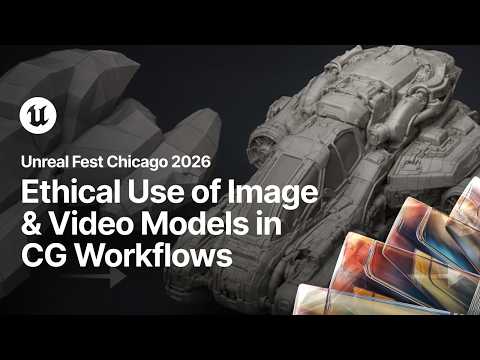
First, at Epic Games' official conference, Unreal Fest Chicago 2026, the ethical use of image and video generation models and the acceleration of workflows was treated as a formal session.
What matters is not a tool showcase but that how to fold these models into production — including the handling of rights and provenance — became an official agenda item on the engine side.
Second, MiniMax H3, a video generation model with native audio, was released with open weights, and methods appeared for running it in ComfyUI on as little as 8GB of VRAM.
That makes the hybrid arrangement — real 3D where accuracy is required at both ends, generation for the parts that only need to flow — something you can test locally without worrying about cloud quotas or whether footage can be uploaded at all.
2025年になると、ツールの側に思想が出てきた。
Higgsfield の FRONTIER トレーラー制作解説は、ジャンル映画がスロットマシンではなく管理されたパイプライン、つまりルックデヴやショットリスト、一貫性の仕組みとして回っていく様子を見せる。
CG アーティストにとっていちばん面白いのは、UE5 の MetaHuman と組み合わせるファースト&ラストフレーム法だ。
正確であるべき両端を本物の3Dで固定しあいだを生成で埋める。
正確さが要るところは CG、流れてさえいればいいところは AI。
この逆転は覚えておく価値がある。
2026年7月には、この流れを象徴する2本が出た。
District 9 のニール・ブロムカンプ監督が、新設のAIスタジオ Barley Studios から、ByteDance の Seedance 2.0 だけで作った13分のSFホラー短編『NIGHTBORNE』を公開している。
本人いわく実在のコンセプトアーティストが関与し、32人の実在の顔と声を使ったとのことで、長編AI映画に向けたフルテストと位置づけられている。
もう一本は、CapCut と Seedance 2.0 を使い、単発のプロンプトでなく会話的にディレクションしていく手法を示す動画で、撮影監督のような「画づくりの指示出し」がAI映画制作でも技能として転用できる、という主張だ。
どちらもまだ前世代の Seedance 2.0 で作られている点は留意しておきたい。
週次ニュースで触れた 2.5(2026年7月31日リリース)に置き換わったとき、この水準がどこまで底上げされるかが次の見どころになる。
そして2026年8月、この分野は「制度」と「手元」の両方へ同時に降りてきた。
ひとつは Epic Games の公式カンファレンス Unreal Fest Chicago 2026 で、画像・動画生成モデルの倫理的な使い方とワークフローの高速化が正式なセッションとして扱われたことだ。
ツール紹介ではなく、権利や出所の扱いを含めて実務にどう組み込むかがエンジン側の公式な議題になった、という点に意味がある。
もうひとつは、音声つき動画生成モデル MiniMax H3 がオープンウェイトで公開され、8GB の VRAM でも ComfyUI 上で動かす手法が出てきたことだ。
ハイブリッドの構図——正確さが要る両端は3D、流れてさえいればよい部分は生成——を、クラウドの利用枠や素材のアップロード可否を気にせず手元で試せるようになる。











Nostalgia as Benchmark: Meiji and Shōwa Eras Compared ベンチマークとしてのノスタルジア — 明治と昭和
There are two Japanese period pieces: one depicting a Meiji-era street scene from 150 years ago, and the other portrays Showa-style urban landscapes in "The Nostalgic Void."
Both serve as some of the most rigorous stress tests in this genre when it comes to maintaining environmental credibility.
The historical settings reveal their greatest weaknesses in terms of authenticity - even a single misplaced electric wire, visible through just one panel's distance, can shatter the illusion for audiences familiar with authentic period references.
The fact that these two films manage to hold together at all is itself evidence of how much spatial and cultural texture they've absorbed as models.
Moreover, the very areas where these flaws appear represent precisely those points where the professional background artists' checklists would have flagged them.
日本の時代物が2本ある。
150年前の文脈から立ち上げた明治の街路と、『The Nostalgic Void』の昭和の街並みだ。
どちらも、環境の説得力という点でこのジャンル屈指のストレステストになっている。
時代物の環境は破綻が目立つ。
看板が一枚違うだけ、時代に合わない電線が一本あるだけで、実物の資料を知っている観客にとって魔法は解けてしまう。
その2本がおおむね持ちこたえていること自体が、モデルがどれだけ空間的・文化的なテクスチャを吸収したかの証拠だ。
そして揺らぐ箇所こそ、モデルには無く、プロの背景の眼にはあるチェックリストにあたる。


Further viewing その他の参照動画
- ComfyUI — consistent AI animations (LinkedIn) 2026-06
- Alien: Prometheus Cinematic Study — AI frame interpolation 2024-06 ・⚠周辺技術
- Higgsfield AI Workflow — FRONTIER Trailer 2025-12 ・ Cannot play - account suspended or deleted by Google (confirmed 2026-07). Keeping as reference. 再生不可 — YouTube側でアカウント停止/削除(2026-07確認)。記録として保持
- Retro Future World — 1950s Sci-Fi AI Short 2024-09 ・ Cannot play - account suspended or deleted by Google (confirmed 2026-07). Keeping as reference. 再生不可 — YouTube側でアカウント停止/削除(2026-07確認)。記録として保持