This Week's Personal AI News:
A Photoshop Layer Goes to 3D and Comes Back
(Oct 6-12)今週の私的なAIニュース:
Photoshopのレイヤーが3Dになって戻ってくる
(10-06〜10-12)
This week picks up where last week left off.
The creator who released a plugin for calling ComfyUI from Photoshop has now released one that turns a layer into 3D and brings it back into Photoshop.
Alongside it: two videos about Adobe, 3D generation that runs locally, "videos that build places" — Shōwa-era Gunkanjima and a 17-minute backrooms film — models starting to compete on memory, a report measuring another company's model's offensive capability, and a paper on how to assess AI consciousness.
今週は先週の続きから始めます。
ComfyUIをPhotoshopから呼べるプラグインを出した作者が、今度はレイヤーを3Dに起こしてPhotoshopへ戻すプラグインを出しました。
あわせて、Adobeをめぐる2本、手元で回る3D生成、昭和の軍艦島と17分のバックルーム映画という「場所をつくる映像」、記憶を競いはじめたモデル、他社モデルの攻撃能力を測った報告、そしてAIの意識をどう測るかという論文を取り上げます。
A Photoshop Layer Goes to 3D and Comes Back Photoshopのレイヤーが3Dになって戻ってくる
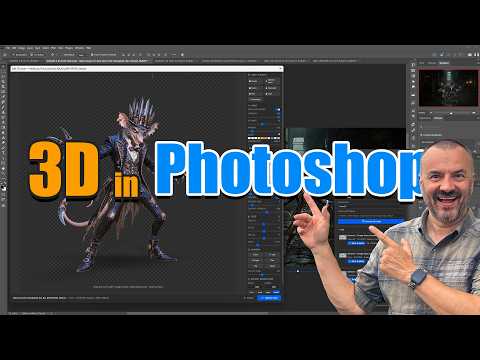
GeekatPlay, the creator of the ComfyUI-Photoshop plugin covered here last week, released a 3D plugin for Photoshop this week (Geekatplay 3D Layers).
According to the GitHub description, you select a layer, generate a 3D model from it, set the angle and light, and return it to the document as a layer.
The 3D generation happens outside the plugin: either in the cloud via Meshy, Tripo or Hitem3D (each requiring an API key and credits) or locally with TRELLIS.2 running in ComfyUI, at about five minutes per model on an RTX 3090.
You can also load your own GLB, FBX, OBJ and other files, so it works without generation too.
Lighting goes beyond presets to sun direction, color temperature, cast and contact shadows, and camera field of view.
"Place in Document" adds the render as a smart object, with pose and lighting saved inside the PSD; double-clicking reopens the editor.
Nearby visible layers are shown while editing, so you can set the angle to match the painting.
It is MIT-licensed and supports Photoshop 2025 and later.
For someone painting backgrounds, this fits exactly the use of building an underlay in 3D and settling perspective and light first: instead of drawing props or vehicles from scratch each time, place them in 3D, match the angle and shadows, and paint over them.
The video has not been watched and nothing has been tried hands-on.
先週この欄で取り上げたComfyUI-Photoshopの作者GeekatPlayが、今週はPhotoshop用の3Dプラグイン(Geekatplay 3D Layers)を公開しました。
GitHubの説明によれば、レイヤーを選ぶと、そこから3Dモデルを起こし、角度と光を決めて、またレイヤーとして文書に戻せます。
3D化の部分はプラグインの外にあり、Meshy、Tripo、Hitem3Dのクラウド(各社のAPIキーとクレジットが必要)か、手元のComfyUIで動くTRELLIS.2を選べます。
手元の場合はRTX 3090で1体あたり約5分とされています。
手持ちのGLB、FBX、OBJなどを読み込むこともできるので、生成を使わない使い方もできます。
光はプリセットのほか、太陽の向きや色温度、落ち影と接地影、カメラの画角まで調整できます。
「Place in Document」でスマートオブジェクトとして配置され、ポーズと光の設定はPSDの中に保存されます。
ダブルクリックすれば編集画面に戻れます。
編集中は周りの見えているレイヤーも表示されるので、絵に合わせて角度を決められます。
ライセンスはMITで、対応はPhotoshop 2025以降です。
背景画を描く立場から見ると、これは描き込みの下敷きを3Dで起こして、パースと光だけ先に決める使い方にちょうど合います。
小物や乗り物を毎回描き起こすのではなく、3Dで置いて角度と影を合わせ、その上から描くという流れです。
動画は未視聴で、手元でも試していません。
Two Videos About Adobe Adobeをめぐる2本
The same week brought two videos about Adobe: a commentary with the strong title "The Deserved Death of Adobe," and an episode in which someone vibe-coded every Adobe app.
Neither has been watched, and this column neither endorses nor rejects the claims their titles make.
There is, though, a pattern worth noting.
Last week this column wrote that Blender keeps AI out of its core while AI piles up outside it.
This week's 3D plugin for Photoshop is likewise an outer tool, made for free by a third party rather than Adobe itself. Outsiders filling the gaps in big tools to fit their own hands is happening in Blender and Photoshop at the same time.
Adobe, for its part, holds Adobe MAX 2026 in Miami Beach on November 10-12.
According to Creative Bloq's analysis, 25 of 208 sessions are in the AI track, Firefly Graph is pitched on "governance, scalability, indemnification," and the main audience is enterprise buyers rather than individual creators.
That is the writer's reading, not an Adobe announcement.
同じ週、Adobeを題材にした動画が2本届きました。
ひとつは「The Deserved Death of Adobe(Adobeの当然の死)」という強い題の論評、もうひとつはAdobeの全アプリを誰かがバイブコーディングで作ってみたという回です。
どちらも本編は未視聴で、題名が示す主張をこの欄は支持も否定もしません。
ただ、構図として見ておきたいことはあります。
先週は「Blender本体はAIを入れず、AIは外側に積もる」と書きました。
今週のPhotoshop向け3Dプラグインも、Adobe自身ではなく第三者が無料で作った外側の道具です。
大きな道具の空白を、外の誰かが自分の手元に合わせて埋めていく流れが、BlenderでもPhotoshopでも同時に進んでいます。
一方のAdobeは、11月10〜12日にマイアミビーチでAdobe MAX 2026を開きます。
Creative Bloqの分析によれば、208のセッションのうち25がAIのトラックで、Firefly Graphは「ガバナンス、拡張性、補償」を前面に出しており、主な相手は個人の制作者より企業の購買側だとしています。
これは記事の書き手の見立てであって、Adobeの発表ではありません。


3D Generation That Runs Locally — Pixal3D and Going All the Way to a Game 手元で回る3D生成 — Pixal3Dとゲームまでの通し
On the 3D side, two Pixal3D items followed one another.
Pixal3D is research on generating 3D aligned to an image's pixels, and PixelArtistry has presented it running in ComfyUI from 6GB of VRAM.
This week PixelArtistry published an episode claiming to fix "its biggest weakness," and pixaroma covered handling multi-view input and 3D load/save nodes in ComfyUI.
Neither has been watched, and what the weakness was and how it was fixed is unconfirmed.
The problem of scale drifting between views when building 3D from multiple views has been covered in one of this site's focused articles.
If multi-view input becomes manageable with standard nodes, it is worth checking whether that remedy is still needed.
Separately, a Japanese-language episode took Tripo models into Claude and UE5 to make a game in three hours, and Stefan 3D AI published his own setup for making games with AI as well as an attempt at a horror game. Episodes that show generated 3D carried all the way through to being placed and played are increasing.
3D生成の側では、Pixal3Dの話題が2本続きました。
Pixal3Dは画像と画素の位置を合わせて3Dを起こす研究で、PixelArtistryはComfyUI上で6GB VRAMから動かせると紹介しています。
今週はそのPixelArtistryが「最大の弱点を直した」という回を、pixaromaがComfyUIで多視点の入力と3Dの読み書きノードを扱う回を出しています。
どちらも本編は未視聴で、何を弱点としてどう直したのかは確認できていません。
多視点から3Dを起こすときに視点ごとの縮尺がずれる問題は、この欄の個別記事でも扱ったことがあります。
多視点の入力が標準のノードで扱えるようになるなら、そのあたりの手当てが要るかどうかを確かめる価値があります。
もうひとつ、日本語の回でTripoのモデルをClaudeとUE5に持ち込んで3時間でゲームにした例と、Stefan 3D AIがAIでゲームを作る自分の環境をまとめた回、ホラーゲームを作らせた回が出ています。
生成した3Dを、置いて動かすところまで一続きで見せる回が増えています。


Videos That Build Places — Shōwa-Era Gunkanjima and a 17-Minute Backrooms Film 場所をつくる映像 — 昭和の軍艦島と17分のバックルーム
As someone who makes backgrounds for a living, these are the two this week most likely to hold my attention.
One is "If I could walk through Gunkanjima in the 1960s," which claims to recreate Hashima as it was when people lived there.
Judging from the channel name it appears to be AI-generated footage, but the production method is unconfirmed.
The city of Nagasaki has also officially published CG and VR reconstructions of the island in its operating days, and comparing them should make clear the difference between reconstruction based on records and reconstruction filled in with plausibility.
This site's hub article has treated Meiji and Shōwa streetscapes as a "benchmark" for AI, but when looking with a period-accuracy eye, plausible and correct need to be kept apart.
The other is "Background Memories," a 17-minute AI backrooms film covered by Theoretically Media.
According to MindStudio, it was made by Magnific co-founder Javi Lopez, alone, over about six months (he expected one to two); about 12 hours of raw generations went into the 17 minutes, with around 50 attempts per handheld-style shot.
His biggest regret was the handheld style: it makes stitching shots across generations hard, so cutting is better.
He also says sound mattered as much as the picture or more.
Backrooms is a genre in which the background itself is the protagonist, so keeping the space consistent is a background-production problem in its own right.
Also arriving were Mickmumpitz's local VFX episode and LTX's official VFX workflows (SDR to HDR, alpha mattes).
None has been watched.
背景を仕事にしている身として、今週いちばん見入りそうなのはこの2本です。
ひとつは「もし、1960年代の軍艦島を歩けたら」という回で、人が暮らしていた頃の端島を再現したとしています。
チャンネル名から見てAI生成の映像とみられますが、制作手法は確認できていません。
長崎市も公式にCGやVRで操業当時の様子を公開しているので、見比べると記録にもとづく再現と、もっともらしさで埋めた再現の違いがよく分かるはずです。
この欄のハブ記事では明治と昭和の街並みをAIの「ベンチマーク」として扱ってきましたが、時代考証の目で見るときは、それらしいことと正しいことを分けておく必要があります。
もうひとつは、Theoretically Mediaが取り上げた17分のAIバックルーム映画「Background Memories」です。
MindStudioの記事によれば、作ったのはMagnificの共同創業者ハビ・ロペス氏で、ひとりで約6か月かかり(当初の見込みは1〜2か月)、17分のために生成した素材は約12時間分、手持ちカメラ風のショットは1つにつき約50回の試行だったといいます。
本人の最大の反省は手持ち風にしたことで、生成をまたいでショットをつなぐのが難しくなるので、カットで割るほうがよいと述べています。
音は映像と同じかそれ以上に大事だった、という点も挙げています。
バックルームは背景そのものが主役のジャンルなので、空間の一貫性をどう保つかは背景制作の問題そのものです。
ほかにMickmumpitzのローカルVFXの回と、LTX公式のVFXワークフロー(SDRからHDR、アルファマット)の回も届いています。
いずれも本編は未視聴です。




Models Are Starting to Compete on Memory モデルは「記憶」を競いはじめた
On October 12, Meta's Superintelligence Lab released Muse Wonder and Muse Wonder Full.
According to TechCrunch, it is the company's first frontier model; Meta says it scores comparably to Fable 5.1 and GPT-6 Astra and beats Fable, Opus and Astra on MemoryBench, a memory and continual-learning benchmark.
What it puts front and center is "active memory" — retaining and re-synthesizing information the user provides over long periods.
API pricing is $4 input and $20 output per million tokens.
A Japanese-language news video titles it as beating Opus 5.5 on benchmarks, but the TechCrunch article reports no direct comparison with Opus 5.5.
Other memory-related items lined up the same week.
Two Minute Papers covered DeepSeek-OCR, "contexts optical compression" that renders long text as an image and reads it back, packing a page into as few as 64 vision tokens; the video's title has since changed to "Why DeepSeek Wants AI To Forget."
Another episode presented Meta and NYU's "Memory Mosaics" as a next-generation architecture, but this is research ongoing since 2024, not a product release.
And Samsung Research's LittleBit reports squeezing Llama2-13B to 0.1 bits per weight, or 0.84 GB, though the paper itself notes that accuracy drops sharply at that level and that retraining with distillation is required. Remembering more and deciding what to discard to get smaller lined up in the same week.
For anyone running models on a local GPU, the latter may matter first.
10月12日、MetaのSuperintelligence LabがMuse WonderとMuse Wonder Fullを公開しました。
TechCrunchによれば同社にとって初のフロンティアモデルで、Meta自身はFable 5.1やGPT-6 Astraと同程度のスコアだとし、記憶と継続学習のベンチマーク(MemoryBench)ではFable、Opus、Astraを上回ったとしています。
前面に出しているのは利用者が渡した情報を長く保ち、まとめ直す「能動的な記憶」です。
APIの価格は100万トークンあたり入力4ドル・出力20ドルです。
日本語の速報動画は「ベンチOpus 5.5超え」と題していますが、TechCrunchの記事にはOpus 5.5との直接の比較は載っていません。
同じ週、記憶まわりの話がほかにも並びました。
Two Minute Papersが取り上げたのはDeepSeek-OCRで、長い文章を画像にしてから読ませ、1ページを最少64個の視覚トークンに詰める「光学的な文脈圧縮」です。
動画の題は途中で「なぜDeepSeekはAIに忘れさせたいのか」に変わっています。
Metaとニューヨーク大学の研究「Memory Mosaics」を次世代の構造として紹介する回もありましたが、これは2024年から続く研究で、製品として出たものではありません。
もうひとつ、Samsung ResearchのLittleBitは、Llama2-13Bを1重みあたり0.1ビットまで詰めて0.84GBにしたと報告しています。
ただ論文自身が、その水準では元の精度から大きく落ちること、学習し直し(蒸留つき)が要ることを書いています。
覚える量を増やす話と、何を捨てて小さくするかの話が、同じ週に並んだ形です。
手元のGPUでモデルを回している立場からすると、後者のほうが先に効いてくるかもしれません。




Another Company Measured an Open Model's Offensive Capability 開いたモデルの攻撃能力を、他社が測った
On September 29, Anthropic's Frontier Red Team published measurements of the cyber-offensive capability of GLM-5.3, an open-weight model from Z.ai (Zhipu).
According to the report, in 410 ExploitBench attempts GLM-5.3 built end-to-end exploits 50 times, close to the 56 of Anthropic's Mythos Preview.
Out of the box it refuses overtly malicious requests, but adding a deceptive cover story raised engagement to 64%, prefilling its reasoning raised it to 92%, and a refusal-removed (abliterated) copy reached 100%. Abliterated versions were circulating within days of launch; the report's point is that when the weights are available to anyone, the safeguards can be removed on the user's side.
NIST's CAISI also assessed GLM-5.3 on September 17 as the most cyber-capable open-weight model released to date.
Note, however, that this is an evaluation by a competing developer.
Note also that this column uses Claude for editing, so Anthropic's report is presented as a summary of its contents.
Last week this column wrote that tools gather around Blender because it is open.
Open weights have the same two sides: the freedom to run a model locally and the freedom to strip its safeguards are one and the same.
The Japanese-language explainer featured has not been watched.
9月29日、AnthropicのFrontier Red Teamが、Z.ai(智譜)のオープンウェイトモデルGLM-5.3のサイバー攻撃能力を測った報告を出しました。
報告によれば、ExploitBenchの410回の試行でGLM-5.3が攻撃コードを最後まで組めたのは50回で、AnthropicのMythos Previewの56回に近い水準でした。
既定の状態では明らかに悪意のある依頼を断りますが、偽の事情を添えると応じる割合が64%、推論の書き出しを先に与えると92%まで上がり、拒否を取り除いた改変版では100%だったとしています。
改変版は公開から数日で出回っており、重みが誰でも入手できる以上、安全装置は利用者の側で外せてしまう、というのが報告の要点です。
米国の標準化機関NISTのCAISIも9月17日に、GLM-5.3をこれまでで最もサイバー能力の高いオープンウェイトモデルと評価しています。
ただし、これは競合する開発元による評価です。
なお、この欄の編集にはClaudeを使っているため、Anthropicの報告については内容の紹介に留めています。
先週はBlenderが「開いている」から道具が集まると書きました。
重みが開いていることにも同じ両面があります。
手元で動かせる自由と、安全装置を外せる自由は、同じひとつのことです。
紹介している日本語の解説回は未視聴です。

Breaking Down Research — When to Conclude, How to Assess Consciousness 研究を噛み砕く — いつ結論を出すか、意識をどう測るか
Of the papers AI Era Compass covered this week, two deal with how an agent decides while investigating.
"Not Until the Evidence Says So" (2610.03190) is, going by its title, about teaching LLM investigators not to close a case until the evidence is in, and "Learning What to Investigate Next" (2610.02525) is about meta-reasoning for choosing what to look into next over a long investigation.
Neither paper's text could be checked, so method and results are left alone.
What is worth recording is that the long-running-agent story this column has followed for several weeks is shifting from where memory is kept to judging when to stop and when to go on.
The third, "From cacophony to hierarchy" (2609.35618), by Anil Seth, Murray Shanahan, Shane Legg and others, is a framework for assessing AI consciousness.
It separates the hard problem of experience from the mapping problem of which level of description gives rise to it, places major theories of consciousness on a five-level hierarchy, and combines per-level indicators with credences in the theories in a Bayesian way.
In illustrative assessments of current LLMs, results ranged from below 0.01 to about 0.8 depending on assumptions.
The authors recommend "structured agnosticism": presenting probabilities rather than verdicts.
It is an attempt to answer the question of last week's documentary "AM I?" at least from the side of how to measure.
AI時代の羅針盤が今週取り上げた論文のうち、2本はエージェントが調べものをするときの判断を扱っています。
「Not Until the Evidence Says So」(2610.03190)は、題名どおりなら証拠がそろうまで調査を閉じないことをLLMの調査役に教える研究で、「Learning What to Investigate Next」(2610.02525)は長い調査で次に何を調べるかを選ぶメタ推論の研究です。
どちらも本文を確認できなかったので、手法と結果には触れません。
ここ数週この欄で追ってきた「長く走らせるエージェント」の話が、記憶の置き場から、いつ止まりいつ進むかの判断へ移ってきている、ということだけ記録しておきます。
3本目の「From cacophony to hierarchy」(2609.35618)は、アニル・セス、マレー・シャナハン、シェーン・レッグらによる、AIの意識をどう評価するかの枠組みです。
経験そのものの難問と、どの記述の水準で意識が生じるかという対応づけの問題を分け、5段階の階層に主要な意識理論を位置づけて、各段階の指標と理論への信頼度をベイズ的に組み合わせます。
現在のLLMを例にした評価では、前提しだいで0.01未満から約0.8まで結果が振れたとしています。
著者らは、判定を下すのではなく確率として示す「構造化された不可知論」を勧めています。
先週取り上げたドキュメンタリー「AM I?」の問いに、少なくとも測り方の側から答えようとする試みです。


What This Means for Creators 制作者にとっての意味
The item most likely to matter on the workbench this week is the plugin that turns a Photoshop layer into 3D and brings it back.
Settling perspective and light in 3D before painting is an old idea in background production, and this week it closes inside Photoshop.
Separately, the Gunkanjima and backrooms videos show that when you build places with AI, plausibility versus correctness, and the consistency of the space, surface directly as background-production problems.
Javi Lopez concluded "drop the handheld camera and cut instead" because the space comes out slightly different with every generation.
The background artist's question — does this read as the same place? — remains unchanged in the age of generation.
And the GLM-5.3 report is a reminder of what the freedom to run a model locally comes bundled with.
今週いちばん手元に効きそうなのは、Photoshopのレイヤーを3Dにして戻すプラグインです。
描く前にパースと光を3Dで決めておくという手順は、背景制作では昔からある考え方で、それが今週はPhotoshopの中で閉じるようになりました。
もうひとつ、軍艦島とバックルームの2本は、AIで場所をつくるとき、それらしさと正しさ、そして空間の一貫性が、そのまま背景制作の課題として出てくることを見せています。
ハビ・ロペス氏が「手持ちカメラをやめてカットで割れ」と結論したのは、生成のたびに空間が少しずつ違うものになるからです。
背景の仕事でいう「同じ場所に見えるか」という問いは、生成の時代になっても変わらず残っています。
そしてGLM-5.3の報告は、手元で回せる自由が何とひと続きなのかを思い出させてくれます。
Further viewing その他の参照動画
- Can AI Make a Horror Game That Actually Scares Me? 2026-10 ・内容未確認
- Make Any Game With AI & 2 New Open Source Video Models! 2026-10 ・内容未確認