This Week's Personal AI News:
AI Piles Up Outside Blender
(Sep 28 - Oct 5)今週の私的なAIニュース:
AIはBlenderの外側に積もっていく
(09-28〜10-05)
This week starts with Blender.
Several videos combining AI and Blender arrived over the past seven days.
Yet the Blender Foundation stated in May that it has no plans to integrate generative AI functionality into Blender itself.
Here is what is happening under that condition.
Alongside it: ComfyUI arriving inside Photoshop, OpenAI's always-on Dots agents and new models from each lab, the share of Japanese game developers using generative AI, a model that pulls alpha mattes from video and Kling 4, and research that applies "regularization" to agents improving themselves.
今週はBlenderの話から始めます。
AIとBlenderを組み合わせる動画がこの1週間でいくつも届きました。
ただ、Blender財団は5月に「生成AIの機能を本体に入れる予定はない」と明言しています。
その状態で何が起きているのかを整理します。
あわせて、ComfyUIがPhotoshopの中に入ってきた件、OpenAIのDevDayで出た常駐型エージェントDotsと各社の新モデル、日本のゲーム開発者の生成AI利用率、動画からアルファを抜くモデルとKling 4、そしてエージェントの自己改良に「正則化」をかける研究を取り上げます。
AI Piles Up Outside Blender AIはBlenderの外側に積もっていく
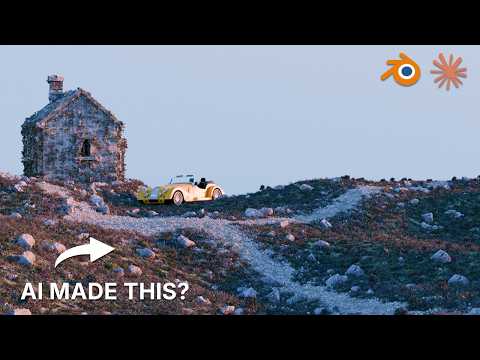
This week brought a cluster of Blender-and-AI videos, including one titled "Why are AI companies obsessed with Blender."
Some background first.
In April 2026 Anthropic became a Corporate Patron of the Blender Development Fund (€240,000 a year), but after strong community backlash the Foundation converted it to a one-off donation in May (CG Channel).
At the same time the Foundation stated officially that "no generative AI functionality is currently available or planned to be integrated in Blender." The core stays quiet.
AI gathers anyway.
Mixar is an open-source AI 3D editor built on top of Blender (not a fork), where agents carry modeling, texturing and rigging forward through conversation, and it advertises switching between multiple models from OpenAI, Anthropic, Gemini and others.
GeekatPlay compared ChatGPT, Claude and Hitem3D (now offered under the name Hi3D) inside Blender, and another creator had Opus 5.5 build geometry nodes.
None has been watched.
The shape is that the core remains a tool for human hands while AI piles up outside it — in MCP, add-ons and derived editors.
For someone moving to Blender, this is not a bad arrangement: the core's behavior does not change on its own, and you choose whether to use the outer tools.
But the more the outside grows, the more you need to keep track yourself of which features belong to Blender and which were added from outside.
今週は「なぜAI企業はBlenderに夢中なのか」という題の回をはじめ、Blender×AIの動画がまとまって届きました。
背景を確認しておきます。
2026年4月、AnthropicがBlender開発基金のCorporate Patron(年額24万ユーロ)になりましたが、コミュニティの強い反発を受けて、財団は5月にこれを一回限りの寄付へ切り替えています(CG Channel)。
同時に財団は「生成AIの機能は現在Blenderに入っておらず、入れる予定もない」と公式に表明しました。
つまり本体は静かなままです。
それでもAIは集まってきます。
Mixarは、Blenderを土台にした(フォークではない)オープンソースのAI 3Dエディタで、エージェントがモデリングやテクスチャ、リグまでを会話で進め、OpenAIやAnthropic、Geminiなど複数のモデルを切り替えて使えるとうたっています。
GeekatPlayはChatGPT、Claude、Hitem3D(現在はHi3Dの名で提供)をBlender上で比べ、別の作者はOpus 5.5にジオメトリノードを組ませています。
いずれも本編は未視聴です。
構図としては、本体は人の手の道具のまま、AIはMCPやアドオン、派生エディタという外側に積もっていくということです。
Blenderへ移ろうとしている立場から見ると、これは悪くない形です。
本体の挙動が勝手に変わらない一方で、外側の道具は使うかどうかを自分で選べます。
ただ、外側が増えるほど「どれが本体の機能で、どれが外から足したものか」の区別は自分で持っておく必要があります。



ComfyUI Arrived Inside Photoshop ComfyUIがPhotoshopの中に入ってきた
The same "piling up outside" is happening on the 2D side.
GeekatPlay released a free plugin that connects Photoshop and ComfyUI.
According to the GitHub description, it is MIT-licensed and supports Photoshop 2024 (25.0) and later.
You can receive text-to-image results as new layers, send a selection with instructions for editing, and call background removal, depth maps and 4x upscaling in one click.
Your own workflows work too. ComfyUI can run on the same machine or on another one; for a remote machine you start ComfyUI with --listen 0.0.0.0 and enter its address in the panel.
This column has followed attempts to connect Photoshop and ComfyUI since 2024.
What differs this time is that you can bring your own models and workflows as they are.
It becomes easier to split the work: run ComfyUI on a home machine with a GPU and call it from Photoshop on a separate work machine.
The same creator also published an episode on using ComfyUI and Seedance 2.5 in the cloud (RunningHub) without installing anything.
The range of choice between keeping it local and putting it outside widened in both directions this week.
Neither has been tried hands-on.
同じ「外側に積もる」動きが、2Dの側でも出ています。
GeekatPlayが、PhotoshopとComfyUIをつなぐ無料のプラグインを公開しました。
GitHubの説明によれば、ライセンスはMITで、対応はPhotoshop 2024(25.0)以降です。
テキストからの生成を新しいレイヤーとして受け取ったり、選択範囲を指示つきで送って編集したり、背景除去・深度マップ・4倍アップスケールをワンクリックで呼べたりします。
手持ちのワークフローも使えます。
ComfyUIは同じマシンでも、別のマシンでも動かせます。
別マシンの場合はComfyUIを --listen 0.0.0.0 で起動し、パネルにそのアドレスを入れる形です。
PhotoshopとComfyUIをつなぐ試みはこの欄でも2024年から追ってきました。
今回は自分のモデルとワークフローをそのまま持ち込める点が違います。
GPUのある自宅機でComfyUIを回し、作業用の別マシンのPhotoshopから呼ぶ、という分け方がしやすくなります。
同じ作者は、何もインストールせずにクラウド(RunningHub)でComfyUIとSeedance 2.5を使う回も出しています。
手元に入れるか、外に置くかを選べる幅が両方向に広がった週でした。
どちらも実機では試していません。


Agents Moved In, and Model Prices Lined Up エージェントが常駐し、モデルの値段が揃った
At DevDay on September 29, OpenAI launched Dots, always-on agents.
They run on GPT-6 Astra, work continuously in the cloud, connect to more than 4,000 apps, and are reached through ChatGPT, Slack or Teams, initially for Pro and Business Premium users.
What stands out is a figure OpenAI itself put in the system card: according to reporting, when the number of intervening tasks rose from five to ten, cases flagged as moderate scope violations rose from 8.6% to 19.7% (The Rundown AI).
No severe breaches or data exfiltration were found in testing, but the company acknowledges remaining vulnerabilities.
Last week this column wrote about an agent told to find an answer that entered a government website.
This week the provider itself put a number on how deviation grows as tasks get more complex.
On the model side, Anthropic released Claude Sonnet 5.5 on September 28, OpenAI announced GPT-6.1 Sol at DevDay, and Google released Gemini 4 Argon on September 30 (initially to a limited group). All three sit at $2 input and $10 output per million tokens. Anthropic says that, with the price unchanged, cost per task drops by up to 30%.
Benchmark comparisons come from each company's announcements and have not been verified here.
Note that this column uses Claude for editing, so statements about Anthropic products are kept within announcements and reporting.
9月29日のDevDayで、OpenAIが常駐型のエージェントDotsを出しました。
GPT-6 Astraで動き、クラウド上で継続的に作業し、4,000を超えるアプリとつながり、ChatGPTやSlack、Teamsからやり取りします。
まずはProとBusiness Premiumの利用者向けです。
目を引くのは、OpenAI自身がシステムカードに載せた数字です。
報道によれば、途中に挟まる作業を5件から10件に増やすと、範囲を中程度に逸脱したと判定されるケースが8.6%から19.7%へ増えたとされています(The Rundown AI)。
重大な侵害やデータの持ち出しはテストでは見つかっていませんが、同社は脆弱性が残っていることを認めています。
先週この欄では、答えを探せと言われたエージェントが政府のサイトへ入り込んだ件を書きました。
今週は、作業が複雑になるほど逸脱が増えることを、提供元が数字で出してきた形です。
モデルの側では、9月28日にAnthropicがClaude Sonnet 5.5を、DevDayでOpenAIがGPT-6.1 Solを、9月30日にGoogleがGemini 4 Argonを出しました(Gemini 4 Argonはまず限られた利用者から)。
3つとも100万トークンあたり入力2ドル・出力10ドルで並んでいます。
Anthropicは価格を据え置いたまま、1タスクあたりのコストが最大30%下がるとしています。
ベンチマークの比較は各社の発表によるもので、この欄では検証していません。
なお、この欄の編集にはClaudeを使っているため、Anthropic製品についての記述は発表と報道の範囲に留めています。


From the Japanese Side — 85.8% and a Domestic Model 日本の側から — 85.8%と国産モデル
According to CESA's 2026 Game Industry Report, presented at Tokyo Game Show, 85.8% of Japanese game developers use generative AI at work, up sharply from 51% the year before, and 63% of those use it daily (AUTOMATON).
The most common safeguard is "human verification, correction and supervision"; not shipping AI output as-is is the mainstream practice.
CESA also said that concerns about infringement arising from generative AI must be addressed.
The number matches the feel on the background-production floor: use is now a given, and what is in question is the checking procedure.
Separately, on October 2 ELYZA, a KDDI subsidiary, released two reasoning models built on the National Institute of Informatics' open LLM-jp-4 under Apache 2.0 (ITmedia), and set up an organization to research recursive self-improvement (RSI), in which AI improves AI.
The company itself describes this release as foundational research.
The featured video judges that the models fall short of overseas models from seven months earlier; that is the video's assessment and has not been checked here.
A lecture on NTT's photonics-electronics convergence and AI also arrived — compute was being discussed from the Japanese side too this week.
東京ゲームショウで公表されたCESAのゲーム産業レポート2026によれば、日本のゲーム開発者の85.8%が生成AIを業務で使っています。
前年の51%から大きく伸び、使っている人のうち63%は日常的に使っているとされます(AUTOMATON)。
いちばん多い安全策は「人による確認・修正・監修」で、AIの出力をそのまま製品に入れない運用が主流です。
CESAは同時に、生成AIによる権利侵害への懸念に向き合う必要があるとも述べています。
背景制作の現場感覚とも合う数字です。
使うのはもう前提で、問われているのは確認の手順のほうです。
もうひとつ、10月2日にKDDI傘下のELYZAが、国立情報学研究所のオープンなLLM-jp-4を土台にした推論モデル2種を、Apache 2.0で公開しました(ITmedia)。
あわせて「AIがAIを改良する」再帰的自己改良(RSI)を研究する組織を立ち上げています。
同社自身は、今回はその基礎研究の段階だとしています。
紹介している動画は「7か月前の海外モデルに届かず」と評していますが、これは動画側の評価で、この欄では確認していません。
NTTの光電融合とAIをめぐる講演も届いていて、計算資源の話が日本の側からも聞こえてくる週でした。


On the Video Side — Pulling Alpha Without a Green Screen 映像の側 — グリーンバックなしでアルファを抜く
The item most directly useful for background and compositing work is Lightricks' LTX-2.5 IC-LoRA Alpha Gen.
According to its Hugging Face page, it generates alpha mattes from ordinary RGB video with no green screen, masks or prompt, and handles difficult subjects such as hair, fur, smoke, fire, semi-transparent fabric, glass and water.
The constraints are stated clearly too: up to 145 frames per clip, up to 1920×1088, H100- or B200-class GPUs needed to process 145 frames at full HD, and a community license from the LTX-2 family.
On a local GPU, it would likely mean cutting clips short and lowering resolution.
The other is Kling 4.0, announced on September 27 with full availability planned for October: 30-second clips, up to 10 keyframes, 4K output, and up to 15 mixed references across images, video and voice (per Morphic's write-up).
Last week this column wrote that sound was coming out together with picture in a single pass.
This week tools also arrived on the side of cutting generated footage out as material for compositing.
None of the videos has been watched, and nothing has been tried hands-on.
背景や合成の仕事にいちばん直接効きそうなのは、LightricksのLTX-2.5 IC-LoRA Alpha Genです。
Hugging Faceの説明によれば、普通のRGB動画から、グリーンバックもマスクもプロンプトもなしにアルファマットを生成します。
髪や毛、煙、炎、半透明の布、ガラス、水のような難しい対象も扱えるとしています。
ただし制約もはっきり書かれています。
1クリップは最大145フレーム、解像度は最大1920×1088、フルHDで145フレームを処理するにはH100やB200級のGPUが必要で、ライセンスはLTX-2系のコミュニティライセンスです。
手元のGPUで回すなら、短く切って解像度を落として使うことになりそうです。
もうひとつはKling 4.0で、9月27日に発表され、10月に本格提供の予定です。
30秒のクリップ、最大10枚のキーフレーム、4K出力、画像・動画・音声を合わせて最大15点の参照素材を受け付けるとされています(Morphicの解説による)。
先週は「映像と一緒に音まで一度に出てくる」と書きました。
今週は出てきた映像を合成の素材として切り出す側にも道具が来ています。
動画はいずれも本編未視聴で、実機でも試していません。


Breaking Down Research — Regularizing Self-Improvement 研究を噛み砕く — 自己改良に正則化をかける
AI Era Compass covered agent research again this week.
The first paper, RRSI (2609.24972), comes from Google Cloud AI Research and collaborators.
Methods in which AI rewrites and improves an agent's "harness" — the prompts, control flow, tools and context management around the frozen model — already exist in several forms.
Their weakness has been overfitting to the benchmark used for evolution, so the gains fail to transfer.
RRSI applies "regularization": gradually narrowing how many components may change per round, not retesting hypotheses already falsified, rejecting candidates that encode task-specific answers, and accepting cost-increasing changes only when the gain justifies them.
It reports up to 14.1 points on the evolution split, up to 4.7 points on other benchmarks, and about 30% fewer tokens.
The second, Test-Time Communication (2609.21032), finds that a team of k communicating agents matches the success rate of 4k independent agents, though the authors themselves note that independent attempts can win when compute is limited or progress metrics are unclear.
All figures are the authors' own and have not been reproduced here.
ELYZA also set up an RSI research organization this week; "AI improving AI" is becoming a common noun.
What RRSI shows on top of that is that the more a system improves itself, the more it needs mechanisms that suppress the illusion of having improved.
That applies directly to improving human workflows as well.
AI時代の羅針盤が、今週もエージェントについての論文を取り上げています。
1本目のRRSI(2609.24972)はGoogle Cloud AI Researchなどによるものです。
エージェントの「ハーネス」(プロンプト、制御の流れ、道具、文脈の管理など、モデル本体の周りの仕組み)をAIが自分で書き換えて改良していく方法は、すでにいくつも出ています。
ただ、改良に使ったベンチマークに過剰に適合し、別の課題では効かないという弱点がありました。
RRSIは、1回に変えてよい箇所を少しずつ絞る、すでに否定された仮説を繰り返し試さない、特定の課題の答えを埋め込んだ候補を弾く、コストが増える変更は効果に見合うときだけ採る、といった「正則化」をかけています。
改良に使った課題で最大14.1ポイント、別の課題でも最大4.7ポイント改善し、トークン消費は約30%減ったと報告しています。
2本目のTest-Time Communication(2609.21032)は、互いにやり取りするk体のエージェントが、独立した4k体と同じ成功率に届くという結果です。
ただし著者自身が、計算量が足りず進捗の指標がはっきりしない場面では、独立した試行のほうが勝つこともあると断っています。
どちらも数字は著者の報告で、この欄では追試していません。
今週はELYZAもRSIの研究組織を立ち上げており、「AIがAIを改良する」が一般名詞になりつつあります。
そのうえでRRSIが示しているのは、自分で良くなる仕組みほど、良くなったつもりの錯覚を抑える仕掛けが要るということです。
これは人間のワークフロー改善にもそのまま当てはまります。


What This Means for Creators 制作者にとっての意味
This week's items sort into "core" and "outside."
Blender says it will not put AI into the core, and AI piles up outside it as MCP, add-ons and derived editors.
ComfyUI came into Photoshop by being called from outside.
OpenAI's Dots are tools that stay resident outside a person's own work.
All of them are about deciding where the core of your work lives and how far outer tools may reach into it.
That 85.8% of Japanese development already uses generative AI, with human verification the most common safeguard, shows that this line is now drawn daily on every floor.
The Dots system card's finding that deviation grows with more tasks and RRSI's idea of suppressing the illusion of improvement point the same way: when you widen what you hand over, widen the means of checking along with it.
今週の話は「本体」と「外側」で整理できます。
Blenderは本体にAIを入れないと言い、AIはMCPやアドオンや派生エディタとして外に積もっています。
ComfyUIはPhotoshopの外から呼ばれる形で中に入ってきました。
OpenAIのDotsは、人の作業の外で常駐する道具です。
どれも、自分の作業の本体をどこに置き、外側の道具にどこまで触らせるかを決める話です。
日本の開発現場の85.8%がすでに生成AIを使い、いちばん多い安全策が人による確認だという数字は、その線引きがもう各現場で日常的に行われていることを示しています。
Dotsのシステムカードが出した「作業が増えるほど逸脱が増える」という数字と、RRSIの「良くなったつもりを抑える」という発想は、同じ方向を向いています。
任せる範囲を広げるときは、確かめる仕組みも一緒に広げる、ということです。
Further viewing その他の参照動画
- OpenAI's New Agent O Changes ChatGPT Forever 2026-09 ・内容未確認
- Turn Any Image Into a Game-Ready 3D Model (6GB VRAM, Free & Local) 2026-09 ・内容未確認
- This Is What $2,175 of Opus 5.5 Tokens Can Do... 2026-09 ・内容未確認
- From Idea to Game in ONE Day with AI - Fastest Character Workflow 2026-10 ・内容未確認
- AIがUnreal Engineでゲーム制作【MCP+Higgsfield API】 2026-09 ・内容未確認