Artificial Intelligence Agent and Game DevelopmentAIエージェントとゲーム開発
By 2026, the most interesting question in game development isn't "Can AI create assets?" anymore.
Now it's: "Are agents capable of managing production pipelines?"
Over the last six months alone, Claude Code has demonstrated building a playable UE5-game using its system, and we've even experimented with running a virtual studio with 49 specialized agent units.
I've documented all these developments—from the perspective of an environmental artist—as tools continue to emerge one after another.
2026年、ゲーム制作でいちばん面白い問いは「AI はアセットを作れるか」ではなくなった。
いまは「エージェントはパイプラインを回せるか」だ。
この半年のあいだに、Claude Code がプレイできる UE5 ゲームを組み上げる様子、製品として出荷される Unreal 専用エージェント、49体のエージェントで仮想スタジオを回す実験までが YouTube に並んだ。
ツールが次々に到来するのを、背景アーティストの立場から書き留めていく。
Agents in the Editors エディタの中のエージェント
The decisive shift lies on the architecture side.
Agents have stopped spitting out code snippets for humans to paste in—they've begun directly interacting with the editor themselves.
They place actors, connect Blueprints, and when they encounter build failures, they adjust accordingly.
Even Aura's NeoStack Agent Integration Kit is riding this bet that the UE editor can become a environment where LLMs can learn operations just like shell commands.
Watching it in action makes the familiar patterns of novice artist mistakes immediately apparent: confident but incorrect placements, rigging errors, and the absence of aesthetic judgment.
Yet one thing stands out—their sheer speed is simply unmatched.
As of July 2026, this pattern has expanded in two directions.
One is the target editor: Fable 5 has been shown taking over Unity outright and assembling a game in a single day, so this is no longer a UE-only story.
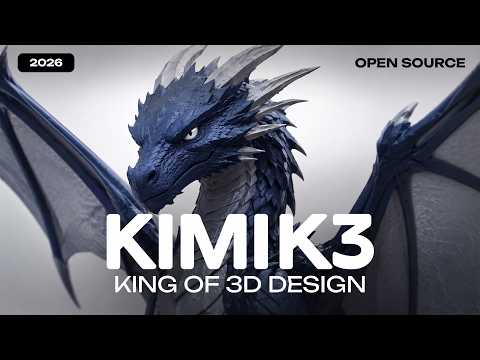
The other is the model side, with Kimi K3 demonstrated handling Blender and 3D work.
K3 is a model with 2.8 trillion total parameters and a one-million-token context that was nevertheless released with open weights — a sign that editor-driving agents are no longer the exclusive territory of closed commercial models.
Whether there remains a path to running these locally is not a small difference for day-to-day production.
決定的な変化はアーキテクチャの側にある。
エージェントは、人間が貼り付けるためのコード片を吐くのをやめ、自分でエディタを操作しはじめた。
アクターを置き、Blueprint をつなぎ、ビルドが失敗すればそれを踏まえてやり直す。
Aura も NeoStack の Agent Integration Kit も、UE エディタは LLM がシェルと同じように操作を覚えられる環境だという賭けに乗っている。
動いている様子を見ていると、失敗の出方は新人アーティストを受け入れたことのある人にはよく分かる。
自信たっぷりの置き間違い、スケールのミス、審美眼の不在。
ただ、速さだけはまるで違う。
2026年7月に入って、この構図は2方向へ広がった。
ひとつは対象のエディタで、Fable 5 が Unity を丸ごと操作して1日でゲームを組み上げる例が出てきた。
UE に限った話ではなくなったということだ。
もうひとつはモデルの側で、Kimi K3 が Blender と 3D まわりを引き受ける実演が出ている。
K3 は総パラメータ2.8兆・コンテキスト100万トークンという規模でありながら重みごと公開されたモデルで、エディタを操作するエージェントが閉じた商用モデルの独壇場ではなくなりつつあることを示している。
ローカルで動かせる可能性が残るかどうかは、この先の実務にとって小さくない差になる。


Single-person studio endurance test 一人スタジオの耐久試験
The most striking example is the "72-hour Dream Game Creation" experiment.
The assets were generated using a generative model, gameplay was handled by Claude Code, and a single human provided direction.
The results may be rough, but they do actually work.
This demonstrated how solo development can be transformed into managing a management problem.
A more extreme version of this concept came from a test where 49 agents attempted to run their own game company.
What becomes apparent is where the system breaks down - it's not the code that fails, but rather coordination issues.
The agents have a tendency to repeat the same tasks, canceling out each other's progress and gradually deviating from their instructions.
August 2026 brought an even tighter version: a souls-like assembled in three days with every asset generated by AI.
The framing matches the 72-hour experiment, but the asset-generation side now has a year more polish behind it.
With a full agent stack available, what separates results is no longer tool capability but how much one person can hold together in their head.
いちばんはっきり示しているのは「72時間でドリームゲームを作る」実験だ。
アセットは生成モデル、ゲームプレイは Claude Code、ディレクションは人間ひとり。
結果は粗いが確かに動く。
ソロ開発を、耐久スポーツからマネジメントの問題へと引き直してみせた。
同じ発想を極端なところまで押し込んだのが、49体のエージェントに「ゲーム会社を経営させる」実験だ。
面白いのはどこで破綻するかだ。
壊れるのはコードではなく、足並みのほうだ。
強いアートディレクションで束ねないと、エージェントは同じ作業を重ね、互いの成果を打ち消し合い、少しずつ指示から逸れていく。
2026年8月には、期間をさらに詰めた例が出た。
全アセットをAIで生成してソウルライクを3日で組み上げる、という試みだ。
72時間の実験と枠組みは同じだが、こちらはアセット生成の側が1年ぶんこなれている。
エージェント一式が揃ったいま、成果を分けるのは道具の性能ではなく、どこまでを一人の頭で束ねられるかのほうだ。






Implications for Background Artists 背景アーティストにとっての含意
Ironically, the aspect of our workflow that currently offers the most profit potential is precisely the least profitable part: layout experimentation, mass asset placement, and the glue code connecting different DCCs.
Conversely, it's exactly this task where the work is truly challenging - the ability to communicate through space and composition, and discerning when a scene is fully realized.
The immediate solution is less resistance and more direction; it's about setting the overall look while letting agents handle quantity, while humans retain control over final refinement.
An artist who can coordinate teams will produce far more content than someone who can only model.
いまのエージェントがいちばん強いのは、皮肉にも背景制作でいちばん採算の薄いところだ。
レイアウトの試行錯誤、大量のアセット配置、DCC どうしをつなぐ糊のコード。
逆にいちばん弱いのはこの仕事が本当に売っている部分だ。
空間で語ること、構図、そして「このシーンはもう完成だ」と見極める眼。
当面の答えは、抵抗ではなく監督することにある。
ルックを決め、量はエージェントに埋めさせ、最後の仕上げは人間が握る。
群れを指揮できるアーティストは、モデリングしかできないアーティストより多くを作り上げていく。