This Week's Personal AI News:
ArtStation Changes Hands, and the Resolution Race in Image-to-3D
(Aug 16-23)今週の私的なAIニュース:
ArtStationの移籍と、1枚から3Dの解像度競争
(08-16〜08-23)
Two quietly significant things happened around 3D production this week: ArtStation and Sketchfab changed owners, and the resolution of image-to-3D generation moved up a step.
From the research side, a paper finding brain-like modular structure inside large language models, and Terence Tao's essay on mathematics in the age of AI — the latter connecting directly to the point made in the GENERAL chapter about domains where correctness can and cannot be verified.
今週は、3D制作の周辺で地味に大きい動きが2つありました。
ひとつはArtStationとSketchfabの運営元が変わったこと、もうひとつは1枚の画像から3Dを起こす側の解像度が一段上がったことです。
研究側からは、大規模言語モデルの中に脳と似たモジュール構造が現れるという論文と、テレンス・タオによる「AI時代の数学」のエッセイを取り上げます。
後者はGENERALの章で書いた「検証できる領域とできない領域」の話に直接つながります。
Breaking Down Research (1): The Same Compartments as a Brain, Formed Inside the Model 研究を噛み砕く(1)モデルの中に脳と同じ区画ができていた
AI Era Compass covers "Modular Cognitive Architecture Emerges in Large Language Models" (2608.13567).
The question is simple: is the brain's compartmentalization by function a necessity for building intelligent systems, or an accident of biological evolution?
The authors ran circuit analyses over 46 tasks spanning four cognitive domains — language, formal reasoning, social reasoning, and physical reasoning — across six instruction-tuned models from 24B to 123B parameters.
The finding: the same task types recruit the same neurons, and different task types do not.
Brains are shaped by biological evolution and language models by gradient descent; the optimization processes are entirely different.
That they arrive at the same modular design anyway suggests modularity may be a fundamental property of intelligent systems.
Not directly applicable to production work, but worth watching as part of the trend toward models becoming legible from the inside.
If it becomes clear where a given capability resides, the precision of fine-tuning and partial replacement should change with it.
AI時代の羅針盤が、「Modular Cognitive Architecture Emerges in Large Language Models」(2608.13567)を取り上げています。
問いは単純で、脳が機能ごとに区画化されているのは知的なシステムを作るうえでの必然なのか、それとも生物進化のたまたまの産物なのか、というものです。
著者らは言語・形式推論・社会的推論・物理的推論という4つの認知領域にまたがる46のタスクについて回路解析を行い、24Bから123Bまでの指示チューニング済みモデル6種で調べました。
結果は、同じ種類のタスクは同じニューロン群を使い、種類が違えば使わない、というものでした。
脳は生物進化で、言語モデルは勾配降下法で形づくられており、最適化の仕組みはまったく違います。
それでも同じモジュール的な設計に行き着いたのなら、モジュール性は知的システムの基本的な性質かもしれない、という含みです。
制作の実務に直接効く話ではありませんが、モデルの中身が「読める」対象になりつつある流れの一部として見ておく価値はあります。
どの領域の能力がどこに宿っているかが分かるなら、微調整や部分的な差し替えの精度も変わってくるはずです。

Breaking Down Research (2): Terence Tao on Mathematics in the Age of AI 研究を噛み砕く(2)テレンス・タオ「AI時代の数学」
The other is an essay by the mathematician Terence Tao, "Mathematics in the age of AI" (2608.16753), based on a public lecture at the 2026 International Congress of Mathematicians and submitted to the ICM 2026 proceedings.
Its construction is unusual: rather than debating whether AI capable of research-level mathematics will actually arrive, it conditions on the hypothesis that it will, and then asks what the goals and values of mathematical research were in the first place, using the problem-solving component of mathematics as its case study.
That stance transfers directly to our own field.
Rather than arguing over whether generative AI can paint an environment, it is probably faster to ask what the goals and values of environment work were, supposing that it can.
In the GENERAL chapter of this site I wrote that a proof can be verified while the persuasiveness of an image has no equivalent verification procedure.
Tao choosing problem-solving as his entry point is presumably because that is precisely the verifiable part.
The video is unwatched, so where the explanation places its emphasis will be added later.
もう1本は、数学者テレンス・タオによるエッセイ「Mathematics in the age of AI」(2608.16753)です。
2026年の国際数学者会議での公開講演がもとになっており、ICM 2026の講演録に投稿されています。
書き方が独特で、研究水準の数学ができるAIが本当に登場するかどうかを議論するのではなく、登場するという前提を置いたうえで、では数学研究の目標と価値とは何だったのかを問い直す、という組み立てになっています。
ケーススタディとして扱われるのは、数学のうち「問題を解く」という側面です。
この構えは、そのまま自分たちの分野に移せます。
生成AIが背景を描けるかどうかを言い争うより、描けるとしたら背景制作の目標と価値はどこにあったのかを先に考えたほうが、たぶん話が早い。
当サイトのGENERALの章で、証明は検証できるが絵の説得力には証明に相当する検証手段がない、と書きました。
タオが問題解決を切り口に選んだのは、まさにそこが検証可能な部分だからでしょう。
本編は未視聴のため、解説の力点については視聴後に追補します。

Epic Let Go of ArtStation and Sketchfab EpicがArtStationとSketchfabを手放した
The news closest to daily practice this week: Epic Games sold ArtStation and Sketchfab to KitBash.
Terms were not disclosed.
Epic acquired ArtStation in April 2021 and Sketchfab three months later; the sale is explained as a consolidation around its core business of Unreal Engine, the Epic Games Store, and Fortnite.
Tim Sweeney stated that Fab, the marketplace launched two years ago, remains under Epic's management.
The buyer, KitBash, operates KitBash3D and Greyscalegorilla, dealing in asset and material libraries, production tools, and workflow technology.
Pricing for ArtStation, Sketchfab, and KitBash products is said to be unchanged.
What's interesting is the reception: coverage prominently notes artists welcoming the move as freedom from "AI slop."
ArtStation was the site of large-scale protests over the handling of AI-generated work at the end of 2022, and there is a sense that moving from a game-engine company to a 3D-asset specialist reads as a change of direction.
That said, no specific policy change has been announced, and how AI-generated content will be handled remains undetermined.
For anyone hosting a portfolio on ArtStation, the terms and the AI policy are worth watching for a while.
今週いちばん実務に近いニュースです。
Epic Gamesが、ArtStationとSketchfabをKitBashへ売却しました。
取引額は非公開です。
Epicは2021年4月にArtStationを、その3か月後にSketchfabを傘下に収めていましたが、Unreal Engine、Epic Games Store、Fortniteという本業へ集中するための整理と説明されています。
Tim Sweeneyは、2年前に立ち上げたマーケットプレイスFabは引き続き自社で運営すると明言しました。
買い手のKitBashは、KitBash3DとGreyscalegorillaを運営してきた会社で、アセットやマテリアルのライブラリ、制作ツール、ワークフロー技術を扱っています。
ArtStation・Sketchfab・KitBash製品の価格については変更しないとされています。
興味深いのは受け止め方で、報道では「AIによるスロップから解放される」とアーティスト側が歓迎している、という論調が目立ちます。
ArtStationは2022年末にAI生成物の扱いをめぐって大規模な抗議が起きた場所でもあり、運営元がゲームエンジンの会社から3Dアセット専業の会社へ移ることを、方向性の改善と受け取る向きがあるということです。
ただし現時点では方針の具体的な変更は公表されておらず、AI生成物の扱いがどうなるかは未確定です。
ポートフォリオをArtStationに置いている立場としては、規約とAIポリシーの変更をしばらく注視することになります。

Image-to-3D Enters a Resolution Race — Hi3D V3.0 1枚から3D、解像度競争の段階へ — Hi3D V3.0
Hi3D released V3.0 on August 19, 2026, billing it as the first commercially available AI 3D model at 2048³ voxel resolution — 2.37 times the total voxel count of the previous 1536³ standard.
It supports 8K texture output and reports improved UV completion algorithms.
Platform features include image-to-3D, AI texturing, model splitting for 3D printing, and multicolor printing.
Access was free for the first 48 hours, with annual plans at 70% off during the same window.
The stated aim is to substantially reduce the manual mesh repair previously required before a model enters production in 3D printing, games, film, or industrial design.
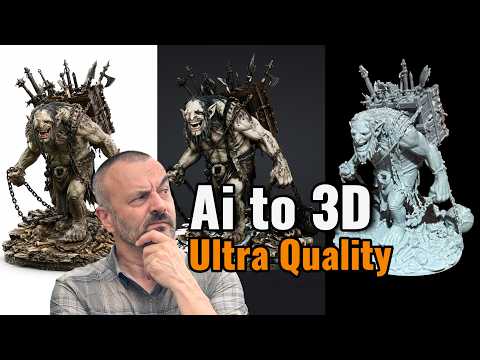
GeekatPlay covers going from a single image to an actual print; Stefan 3D AI covers what the 2048³ figure actually means.
Resolution claims invite misreading because the numbers are flashy, but from a background-production standpoint what matters is not visible detail so much as the amount of fixing required.
Adoption is decided not by whether output is usable as-is but by whether repair time halves.
In that sense, foregrounding "reduced mesh repair" points in the right direction as a pitch.
No hands-on verification has been done here.
Hi3Dが2026年8月19日にV3.0を公開しました。
商用で提供されるAI 3Dモデルとして初の2048³ボクセル解像度をうたっており、従来の1536³から総ボクセル数で2.37倍になります。
8K解像度のテクスチャ出力に対応し、UV補完のアルゴリズムも改善されたとしています。
プラットフォーム側の機能としては、画像からの3D化、AIによるテクスチャ生成、3Dプリント向けのモデル分割、多色印刷への対応が挙げられています。
公開から48時間は無料開放され、同期間中は年間プランが70%引きという売り方でした。
狙いとして明示されているのは、3Dプリント・ゲーム・映像・工業デザインといった実制作へ入る前に必要だった手作業のメッシュ修復を大幅に減らすことです。
GeekatPlayが1枚の画像から3D化して実際に印刷するところまでを、Stefan 3D AIが2048³という数字の中身を、それぞれ扱っています。
解像度の話は数字が派手なぶん誤解されやすいのですが、背景制作の観点で効くのは見た目のディテールより手直しの量です。
生成物をそのまま使えるかではなく、修復にかかる時間が半分になるかどうかで採否が決まります。
その意味で「メッシュ修復の削減」を前面に出しているのは、売り文句としては正しい方向を向いています。
実機での検証は未実施です。
Local Video Generation: From Releases to Comparisons ローカル動画生成、出揃った3本の比較へ
The last two roundups covered MiniMax H3's open-weight release, LTX-2.5, and Wan 3.0 entering beta in quick succession.
This week brings the next stage: comparison.
GeekatPlay published a large test running LTX 2.5, MiniMax H3, and Wan 2.2 under matched conditions in ComfyUI, and AI Search approaches it from the angle of the fastest local video generator.
That open-weight models from several lineages all landed within a month and head-to-head testing began immediately afterward says a lot about the pace of this field.
Worth keeping in mind: the terms of comparison change completely with the use case.
Do you choose on speed, on audio sync, on how reference inputs behave, or simply on whether it fits your VRAM?
For environment work, what's usually needed is not a finished 30-second piece but dozens of few-second clips for checking layout — in which case iteration speed beats quality.
Neither video has been watched, so no figures or conclusions are drawn here; they will be added later.
前回と前々回で、MiniMax H3のオープンウェイト公開、LTX-2.5の公開、Wan 3.0のベータ入りを続けて取り上げました。
今週はその次の段階、つまり比較検証が出てきています。
GeekatPlayがComfyUI上でLTX 2.5とMiniMax H3とWan 2.2を同条件で回す大規模なテストを公開しており、AI Searchは「最も速いローカル動画生成」という切り口で扱っています。
ひと月のあいだに複数の系統からオープンウェイトのモデルが出揃い、その直後に横並びのテストが始まる、という流れ自体がこの分野の速度をよく表しています。
注意しておきたいのは、比較の条件が用途によってまったく変わることです。
速度で選ぶのか、音声の同期で選ぶのか、参照入力の効き方で選ぶのか、あるいは自分のVRAMに載るかどうかで選ぶのか。
背景制作でいえば、必要なのは30秒の完成映像ではなく、レイアウト確認用の数秒のクリップを何十本も回すことのほうが多いはずで、その場合は品質より試行の速さが効きます。
どちらの動画も本編は未視聴のため、実測値や結論には踏み込みません。
視聴後に追補します。


What This Means for Creators 制作者にとっての意味
This was a week in which the ground moved rather than tool capability.
ArtStation and Sketchfab changed hands, image-to-3D steered toward resolution and reduced post-processing, and video moved into the comparison phase now that the models have all landed.
All of it is less about what became possible than about where to host things and what to choose on.
The two research items pointed the same way: finding function-specific compartments inside a model is a story about eventually being able to read and choose on internals, and Tao's essay is a stance of conditioning on capability and re-examining goals and values.
On the open-weight side, DeepSeek V4-Pro reached general availability on August 13 with weights published under an MIT licence — something in the same tier as closed models remains obtainable without usage restrictions.
The more options there are, the more it matters whether you can articulate your own basis for choosing.
Next week continues on the same view.
今週の材料は、道具の性能ではなく足場のほうが動いた週でした。
ArtStationとSketchfabの運営元が変わり、1枚から3Dを起こす側は解像度と後処理の削減へ舵を切り、動画側は出揃ったモデルの比較段階へ入っています。
どれも「何ができるようになったか」より「どこに置くか、何で選ぶか」の話です。
研究の2本も同じ方向を向いていました。
モデルの中に機能ごとの区画が見つかったという話は、中身を読んで選べるようになる可能性の話ですし、タオのエッセイは、能力の到来を前提に置いたうえで目標と価値を問い直せという構えでした。
オープンウェイトの側ではDeepSeek V4-Proが8月13日に一般提供へ入り、MITライセンスで重みが公開されています。
閉じたモデルと同じ土俵に乗るものが、使用条件の制約なしに手に入る状態が続いています。
選択肢が増えるほど、選ぶ基準を自分で言語化できるかどうかが効いてきます。
来週も同じ見方で追っていきます。